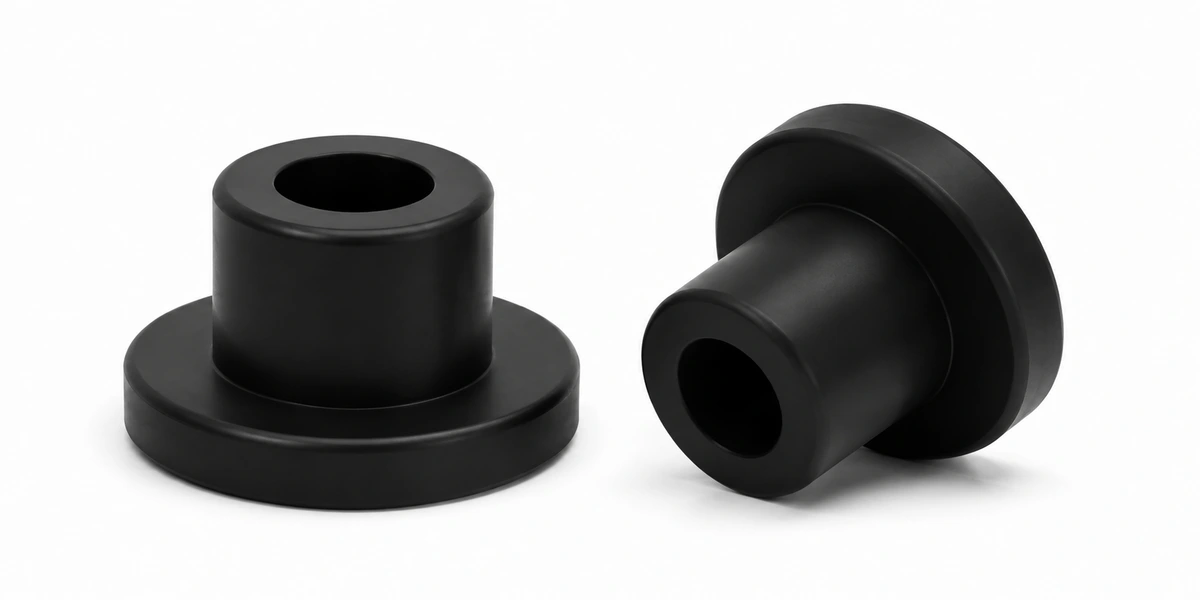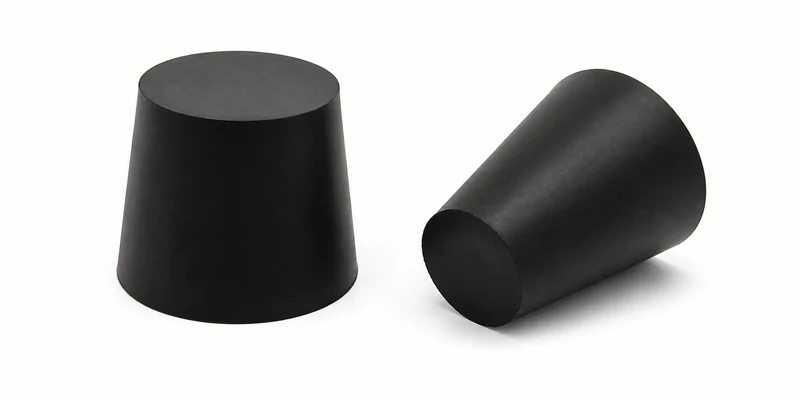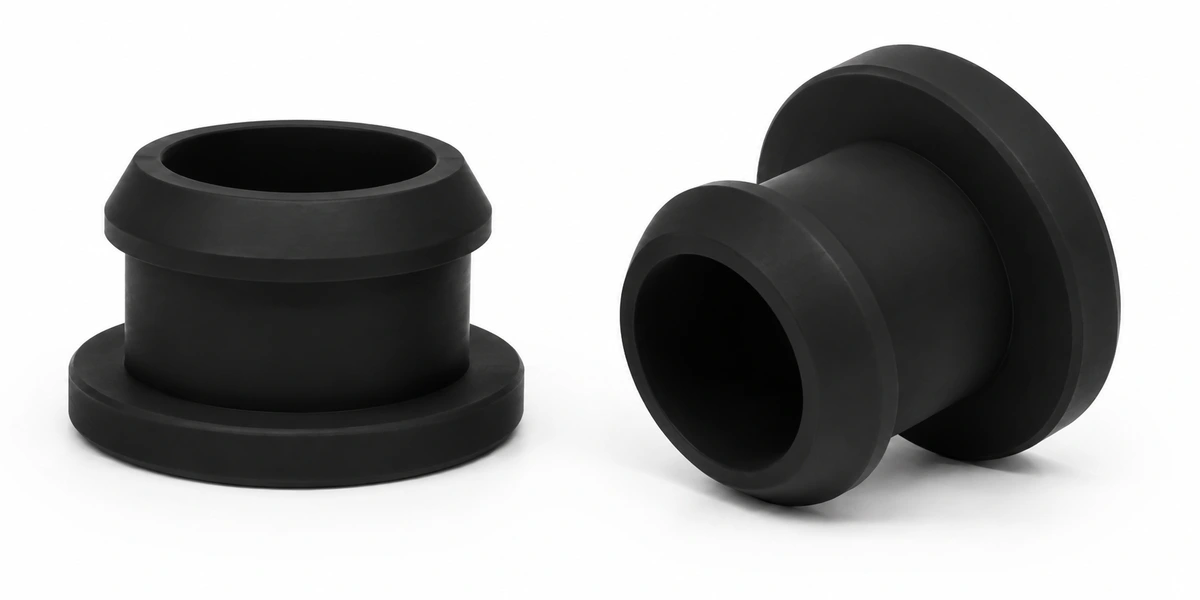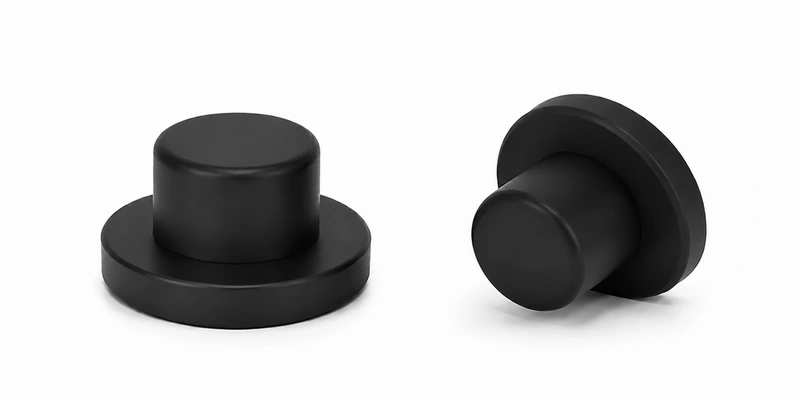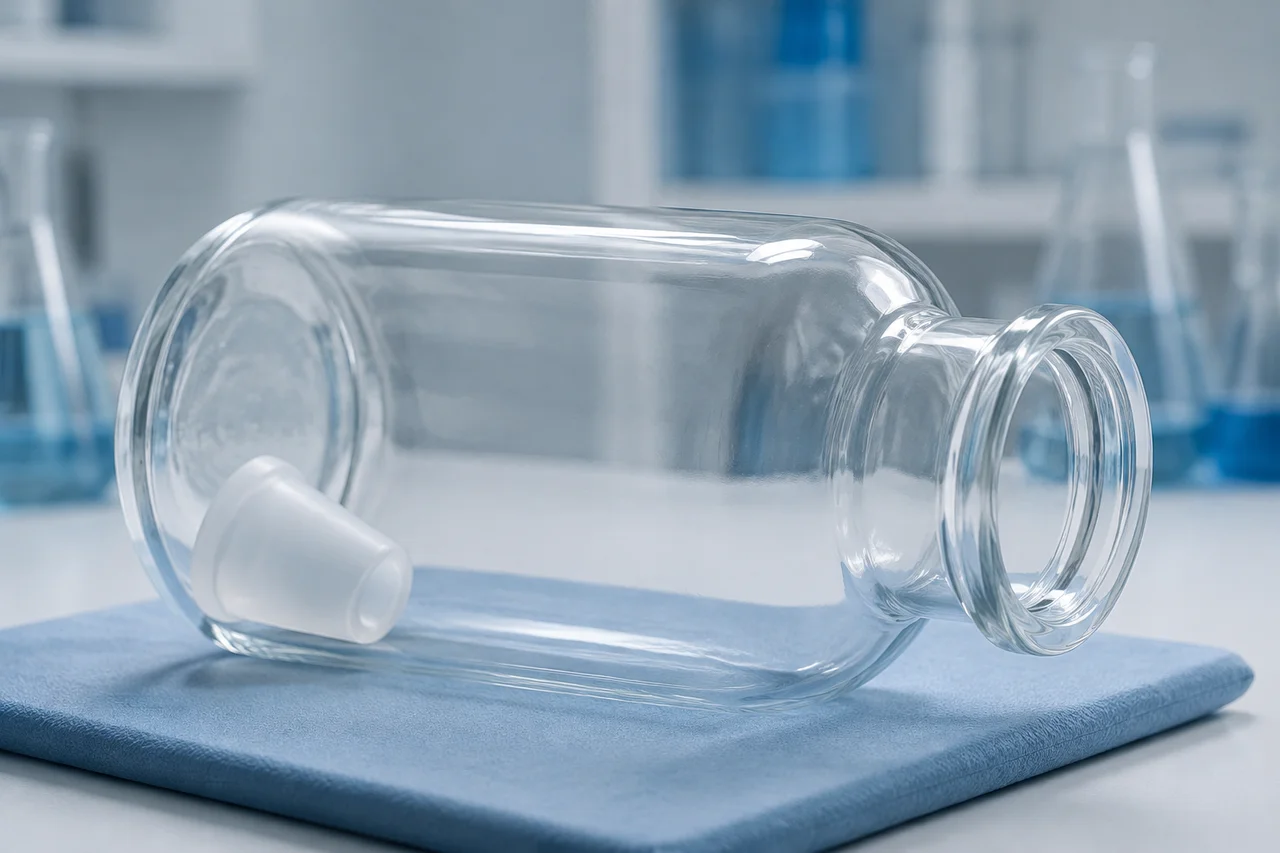
First establish whether the stopper is lodged in the neck or has fallen completely inside the bottle. Then assess the contents and any pressure hazard. Containers holding unknown chemicals, hazardous residues or pressure need an appropriate controlled procedure.
A stopper lodged in the neck may be too deep, swollen, bonded by residue or held by reduced internal pressure. With an ordinary empty container confirmed safe to handle, support the bottle and try gentle rotation of the exposed stopper. If it will not move with light effort, stop rather than transferring greater torque to the glass neck.
For a stopper inside a clean, empty, nonhazardous bottle, the opening determines what is possible. Tilt the bottle to bring the stopper near the neck. If it can pass through freely, an appropriate blunt retrieval tool may help. Do not use the rim as a fulcrum or force an oversized stopper through it.
Avoid pressurizing the container to eject the stopper, applying a flame, imposing sudden temperature changes or striking the glass. These approaches introduce uncontrolled ejection or breakage risks.
If removal would require destroying the stopper, have suitable personnel assess the method. Afterwards, remove fragments and inspect the container before reuse. Important samples may also require a contamination assessment. Review the replacement fit and insertion stop so the same problem does not recur.
← Back to all articles