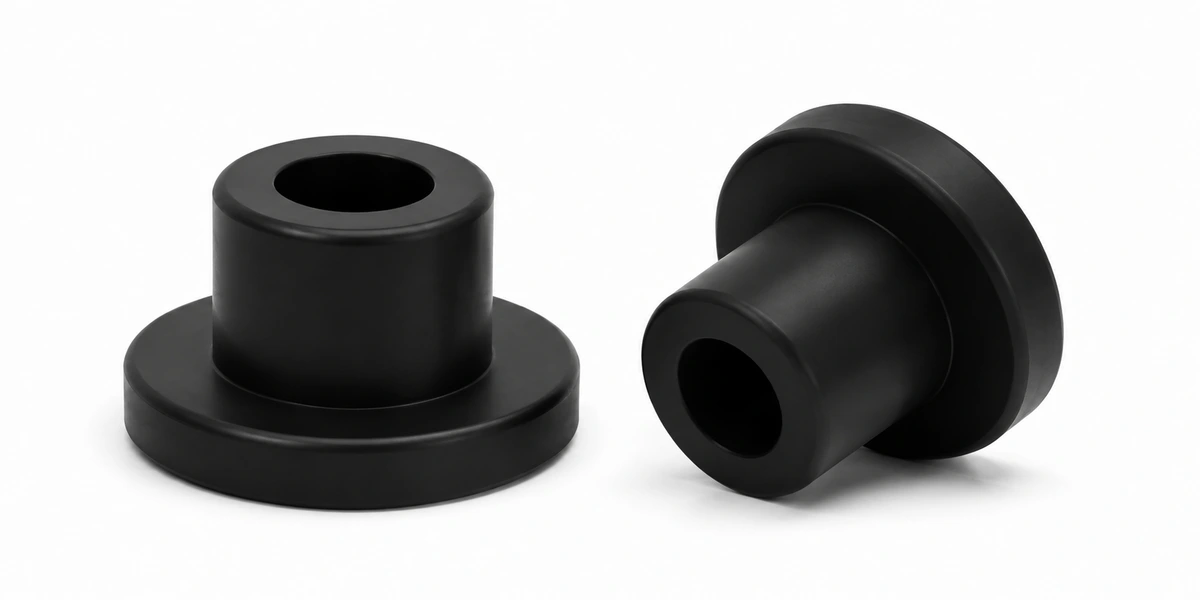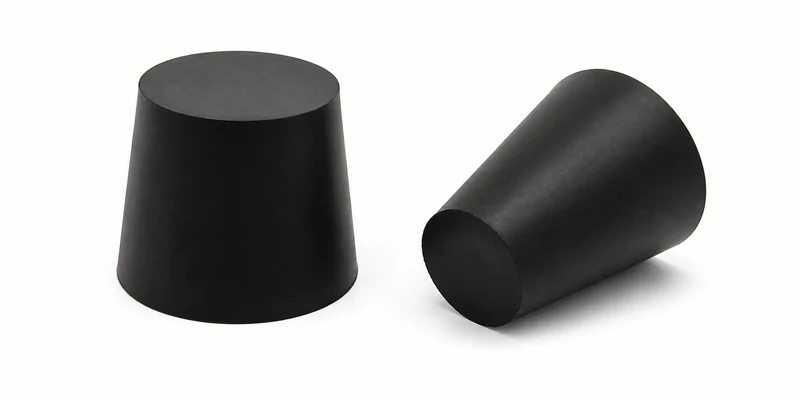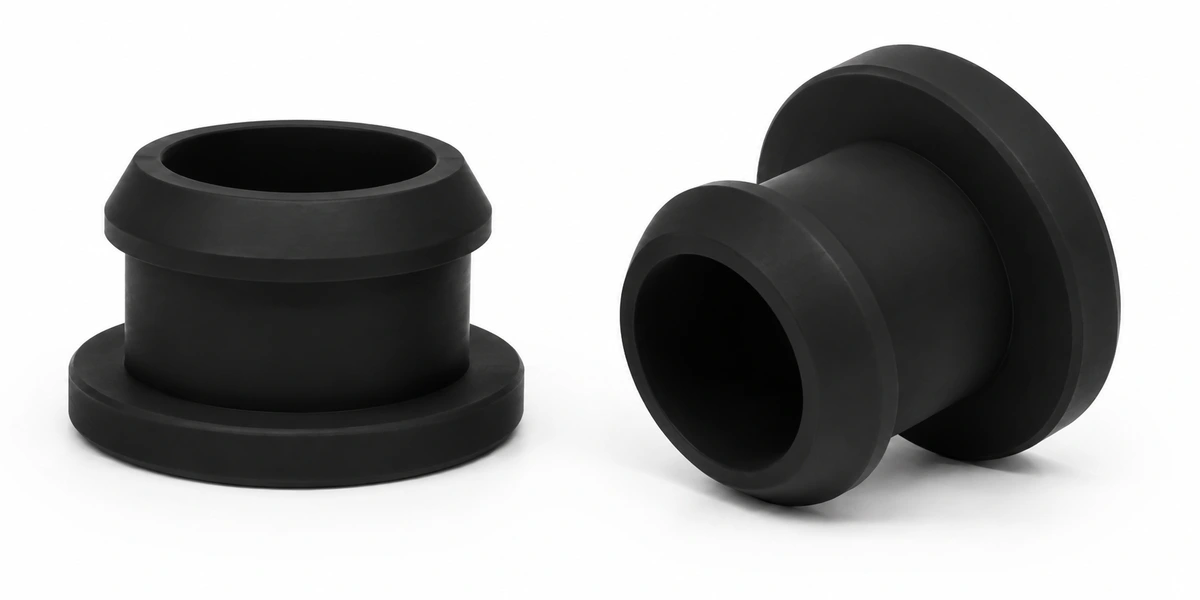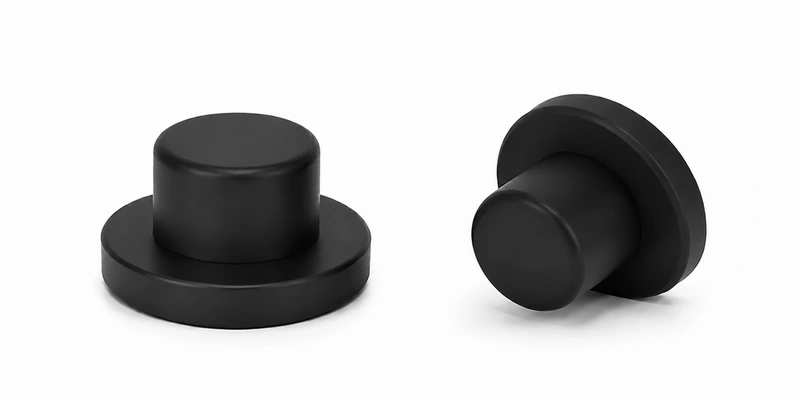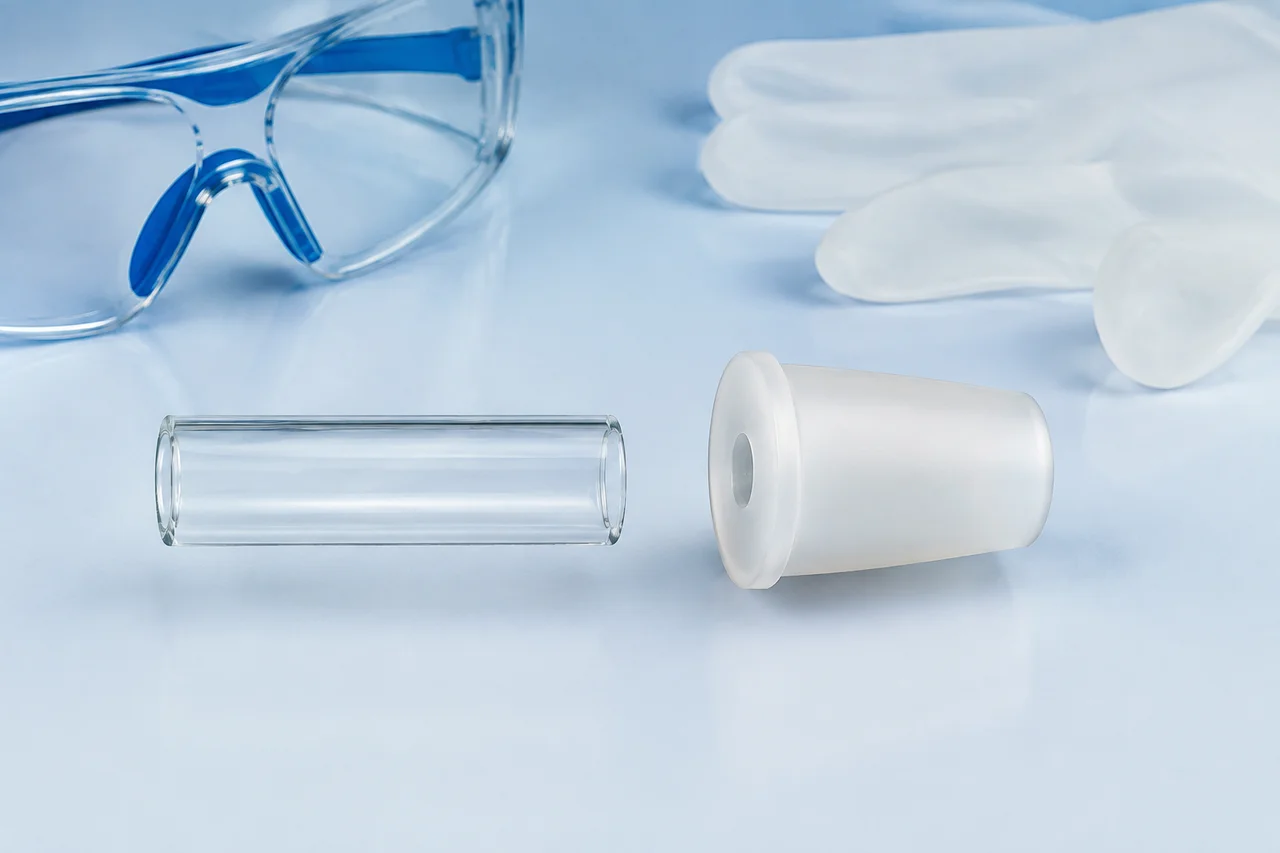
Glass tubing can break suddenly when pushed through a tight hole. Where suitable, use a preassembled component or an alternative connector to reduce manual glass handling.
If assembly is necessary, inspect the tube for cracks and confirm that its end is smooth and rounded. Any end finishing should be performed by trained personnel, with the glass fully cooled before handling. Check the hole-to-tube fit before applying force.
Use eye protection and the cut-protection measures specified by the laboratory procedure. Thin disposable gloves are not a substitute for protection against broken glass. Any lubricant must be compatible with the stopper and the subsequent experiment.
Hold the tube close to the insertion point and advance it slowly with a slight twisting movement. Keep the receiving hand out of the path of the emerging end. Do not grip the far end of a long tube or bend it while pushing.
Stop if resistance rises, the tube flexes or an unusual sound occurs. Recheck the bore and surfaces instead of trying to overcome the resistance with more force.
After assembly, inspect for torn rubber and damaged glass, and independently support the projecting tubing. An older assembly that has become stuck should also be handled under the laboratory procedure rather than pulled apart forcefully.
← Back to all articles