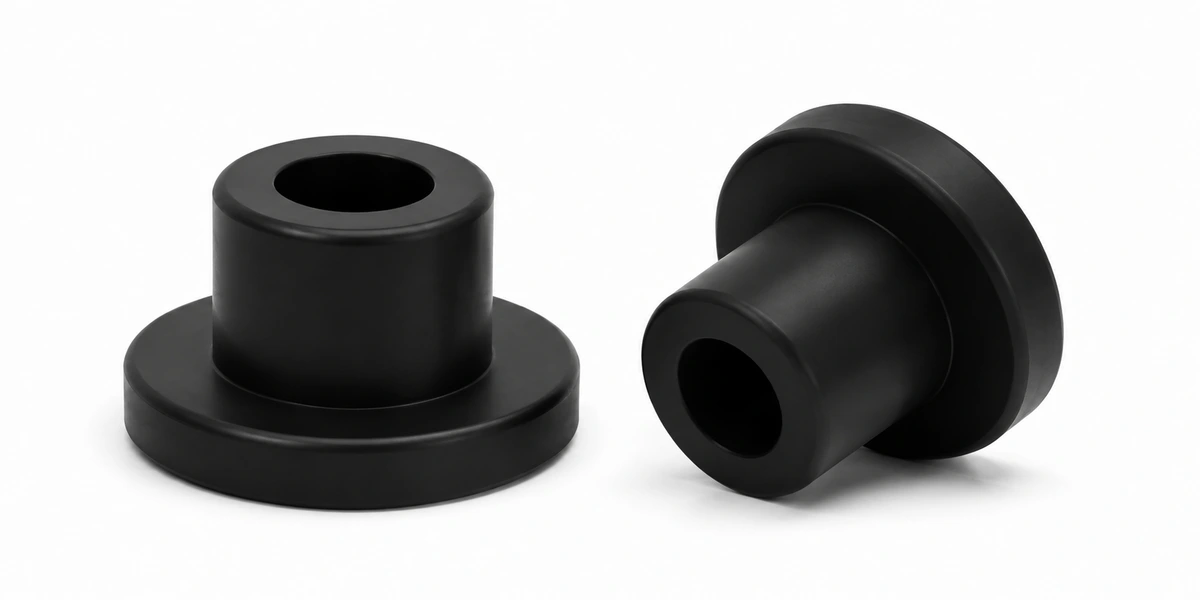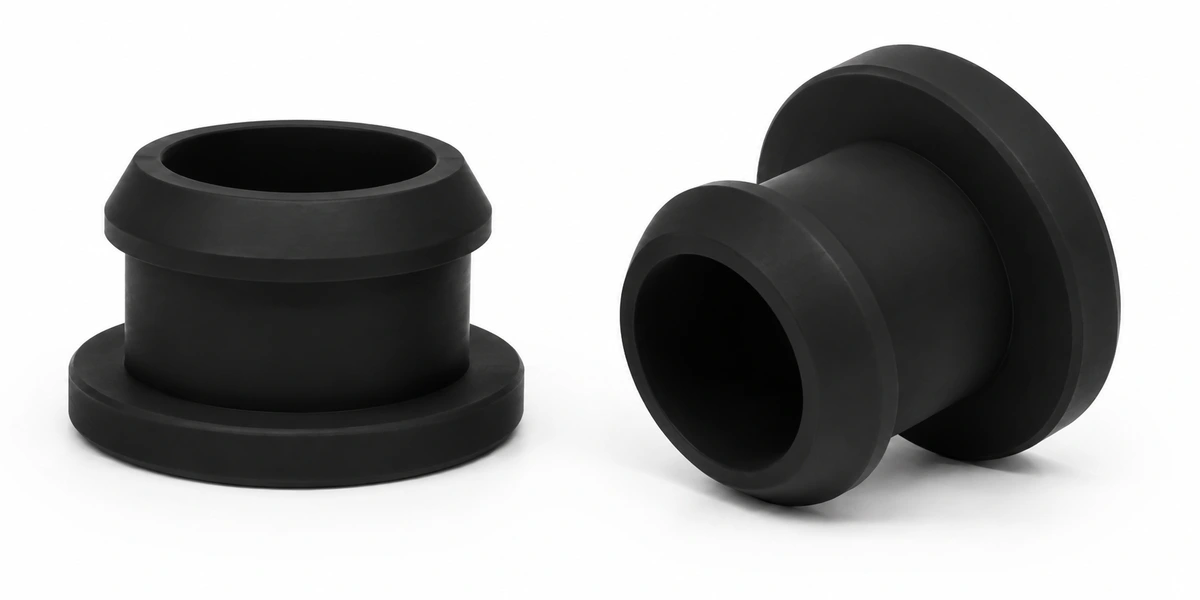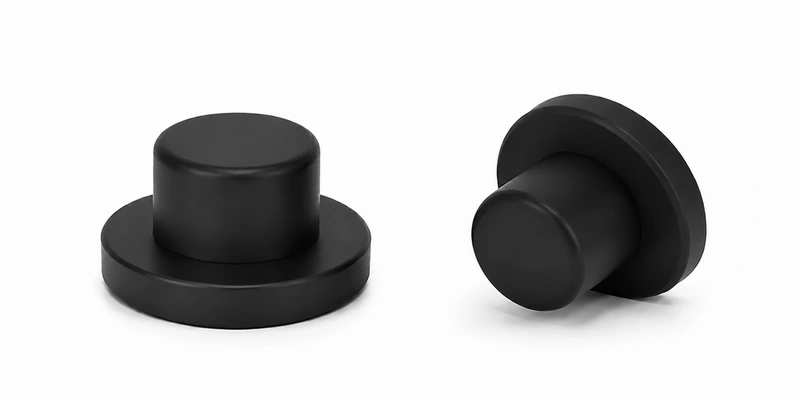
There is no standard weight for a rubber stopper. External dimensions, compound density, holes, cavities and inserts all influence its mass. Two components with similar outlines can therefore weigh differently.
For a direct measurement, place a clean, dry sample on a zeroed balance. Tare any weighing dish first. If the component is too light for a useful individual reading, weigh several matching pieces together and calculate their average.
Suppose 20 dry stoppers have a combined mass of 96 grams. Dividing by 20 gives an average of 4.8 grams per stopper. These figures are an illustrative calculation, not a product specification. The average helps with quantity estimates but does not prove that every piece has the same mass. Weigh pieces individually when variation matters.
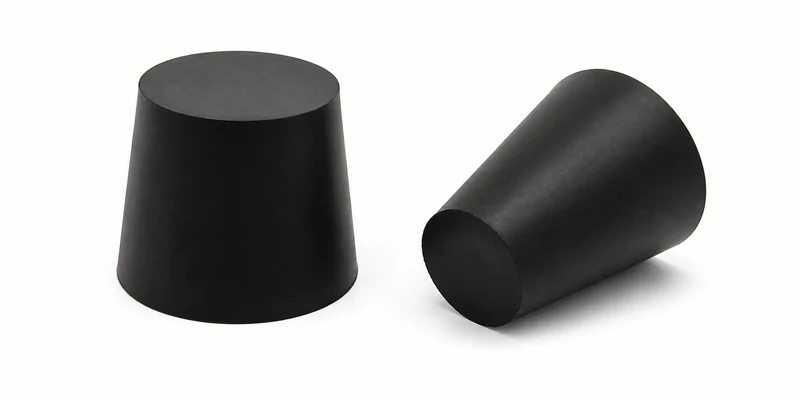
A regular solid tapered stopper can also be estimated from its volume and the density of the actual compound. Subtract holes and recesses, and account separately for inserts. Using a generic rubber density may produce a misleading result.
In production inspection, a mass change can help flag missing material, excess flash or a possible compound difference. It cannot replace dimensional and sealing checks.
For shipping estimates, distinguish product net mass from shipment gross mass. Bags, trays, cartons and other packaging must be added separately rather than included in the quoted single-piece weight.
← Back to all articles