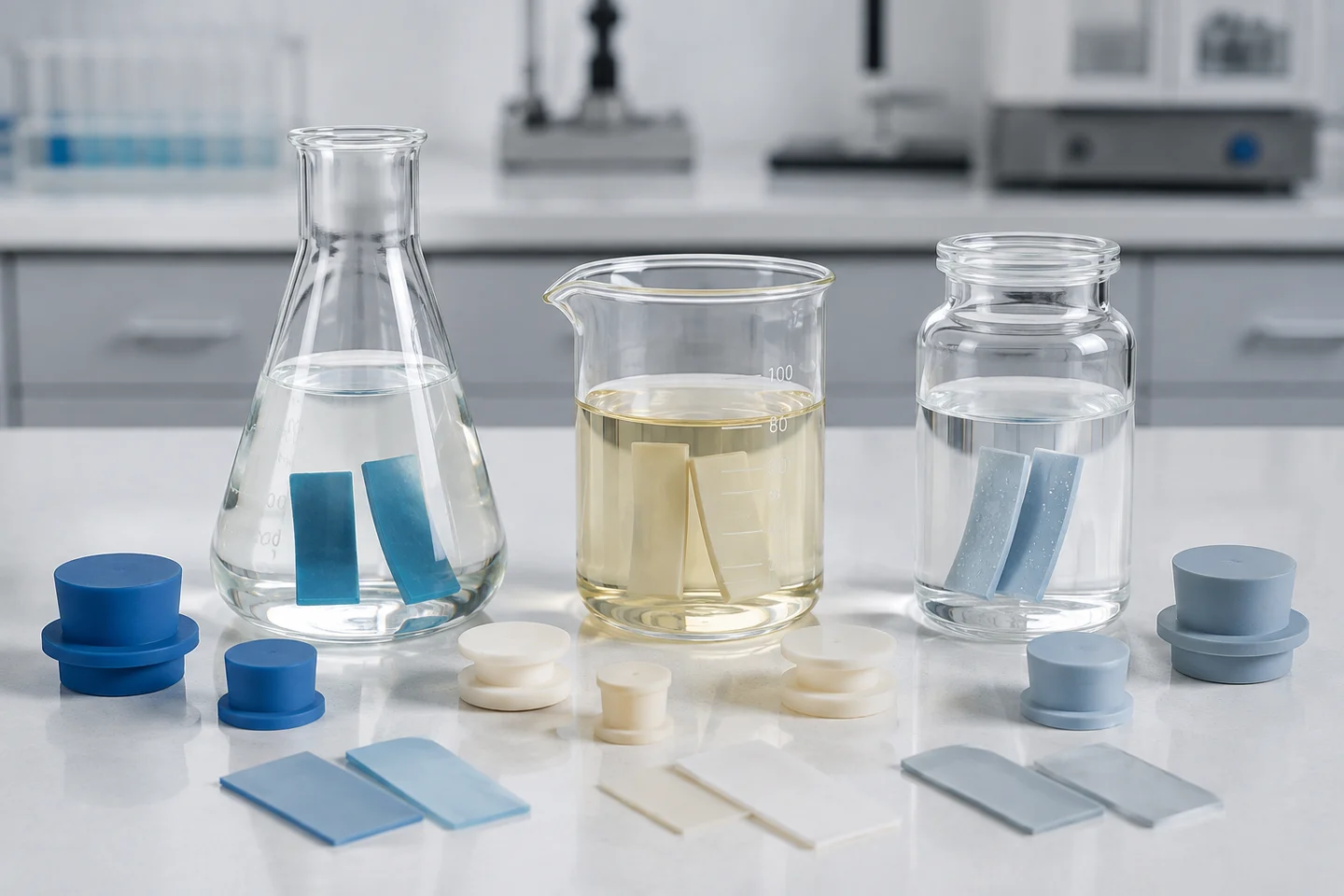
Identify the actual exposure
List each fluid, cleaning agent and process chemical that can touch the plug. Provide the product name or chemical identity, concentration, temperature and contact duration. Describe rinsing, drying and repeated exposure. Where a proprietary mixture is used, share its available technical information through the appropriate project channel.
Use compatibility information as a screen
Ask engineering to review available information for the specific compound and exposure. A compatibility chart can help narrow the options, but its test conditions may differ from your process. Do not assume a rating for a pure chemical covers a mixture, a different concentration or a different temperature. Record any gaps that need sample evaluation.
Define what acceptable means
Agree which changes would affect the application: dimensions, mass, appearance, hardness, installation force or the sealing result. Specify how samples will be conditioned and measured, including any period after removal from the fluid. Use the same method before and after exposure so results can be compared.
Validate the assembled part
Test production-intent plugs in the real mating geometry using a representative exposure sequence. Recheck fit and the required function after conditioning. Retain the test conditions and compound identification with the approval record. Review the selection again if the process fluid or cleaning method changes.
← Back to all articles