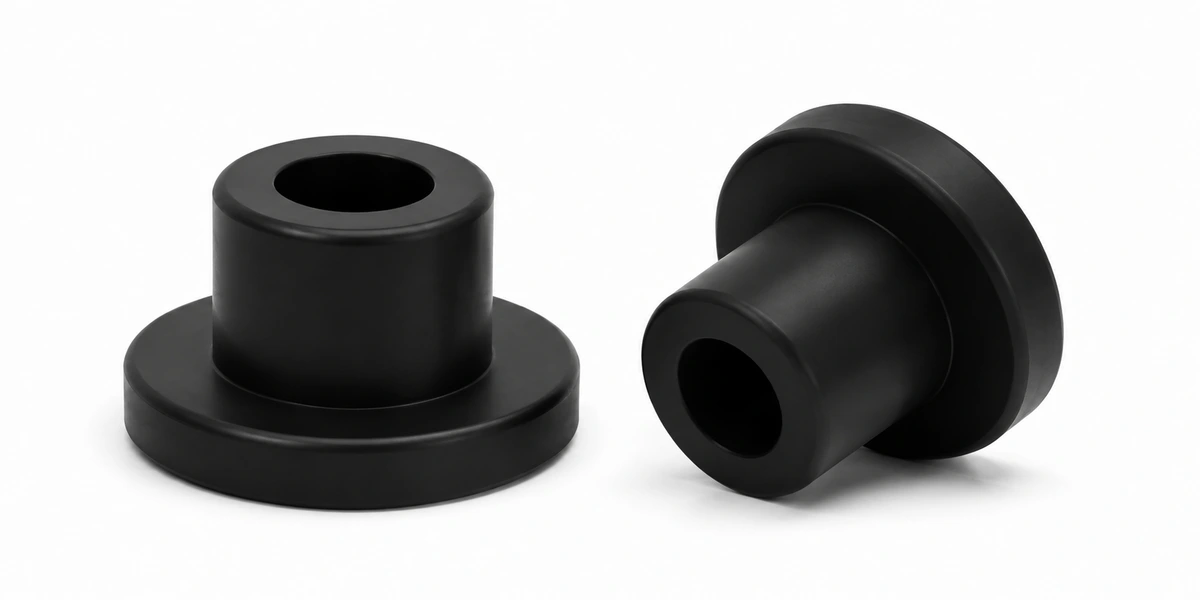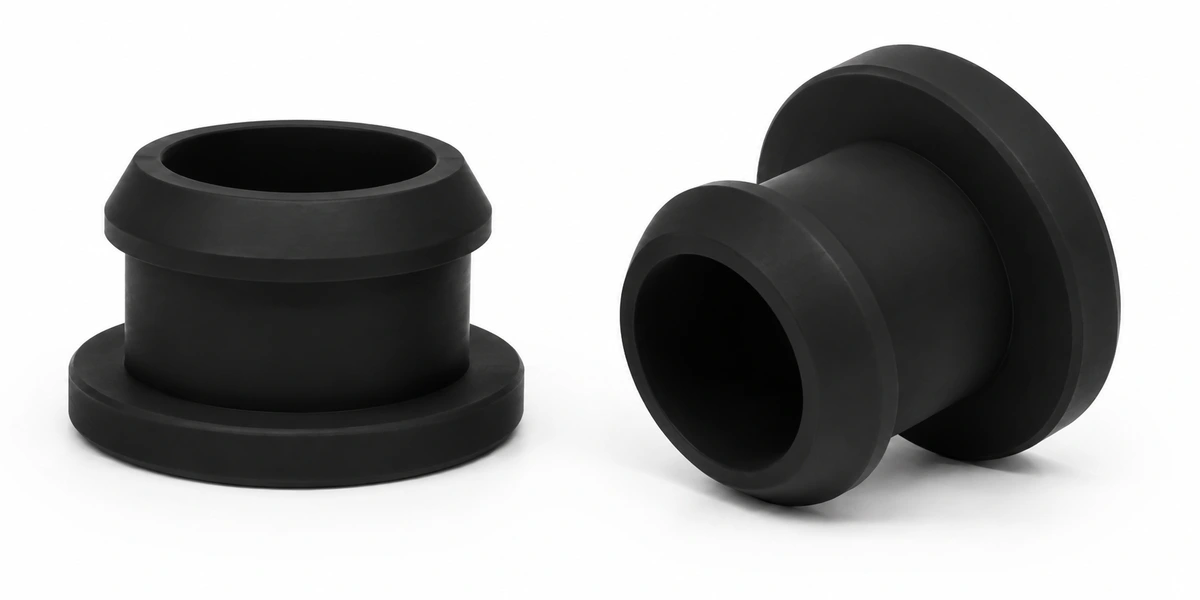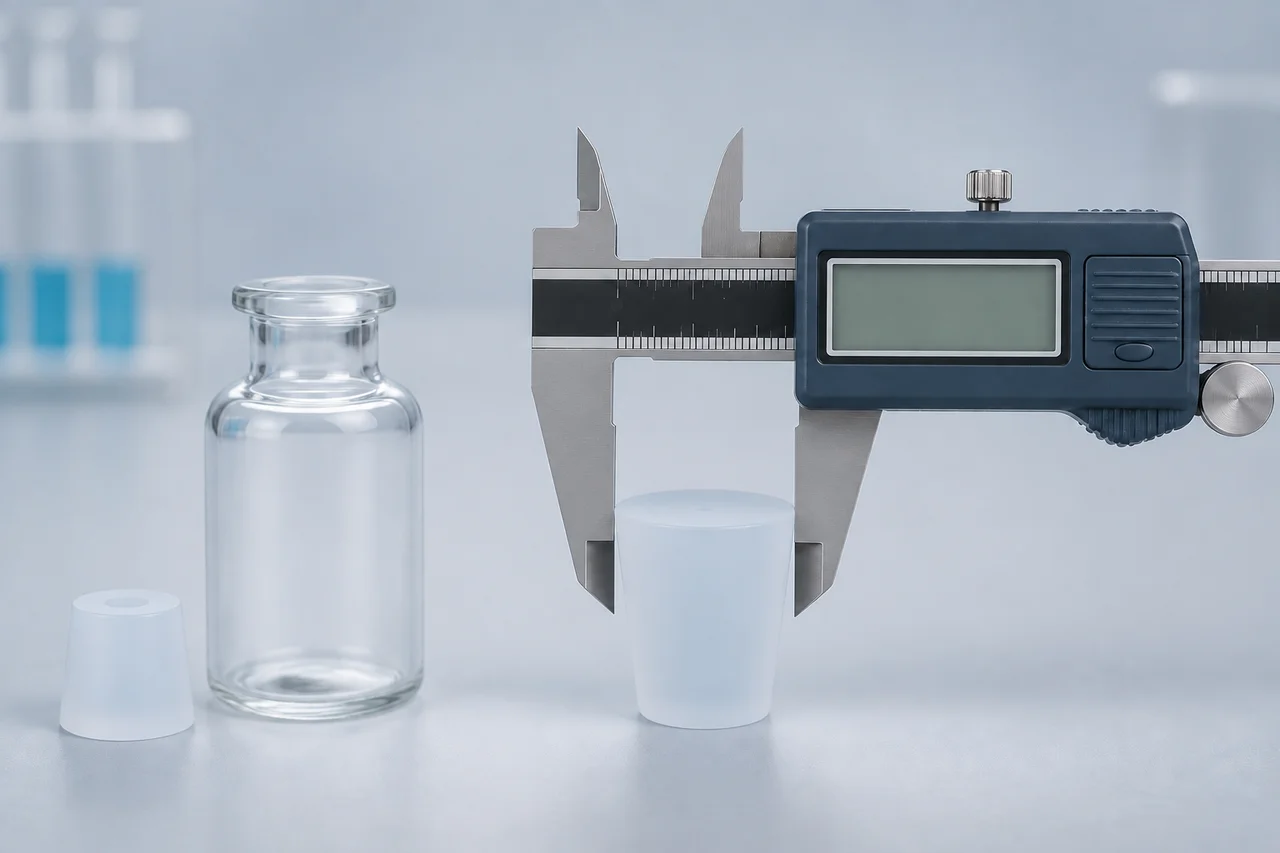
A one-gallon jug, a two-liter bottle and a wine bottle cannot be assigned a stopper size from capacity alone. Containers with the same volume may have different neck diameters, tapers and available insertion depths.
Measure the actual contact area first. Check the internal diameter in more than one direction, then examine how the neck changes below the entrance. Note shoulders, steps and the usable depth. The outside diameter of a threaded neck is not the dimension required for an internal bung.
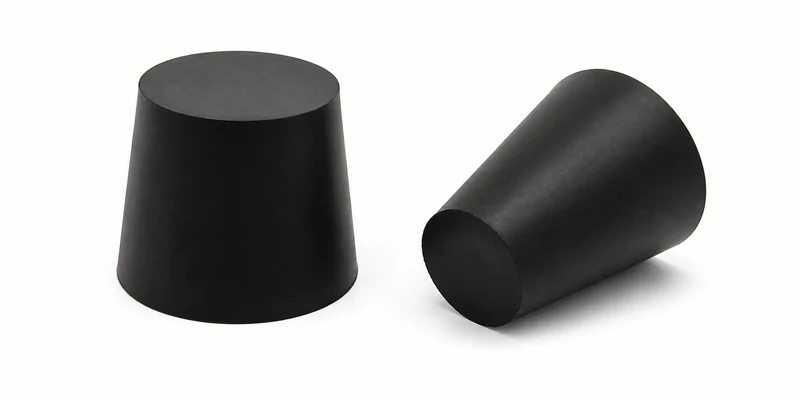
Tapered stoppers are commonly described by large-end diameter, small-end diameter and height. For initial selection, the narrow end must enter the opening, while the intended sealing region needs appropriate interference. Having a neck diameter somewhere between the two end diameters is only a screening check; insertion depth and removal access still matter.
Use light measuring pressure on soft components. Squeezing a stopper with caliper jaws can produce an undersized reading. An old stopper that has swollen or taken a permanent set is also a poor reference for a replacement drawing.
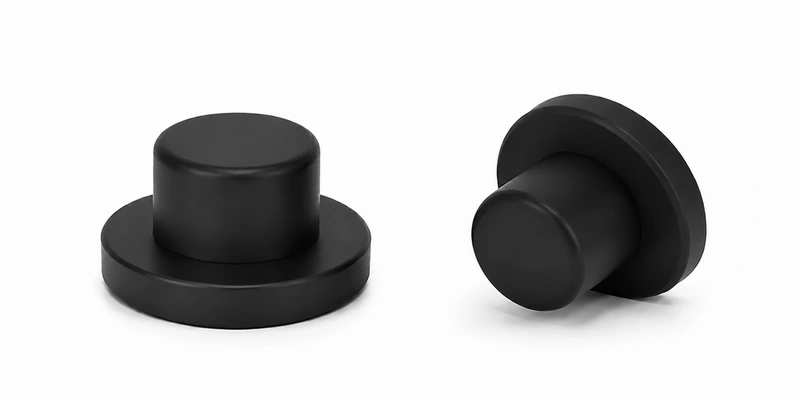
Flanged vial closures need their matched bottle, stopper and cap specifications. Their fit should not be assessed using tapered-bung rules.
Use supplier size numbers to locate products, then confirm dimensions, tolerances and sample fit. Validate the assembled closure under the actual contact medium, temperature and storage orientation when leakage matters.
← Back to all articles