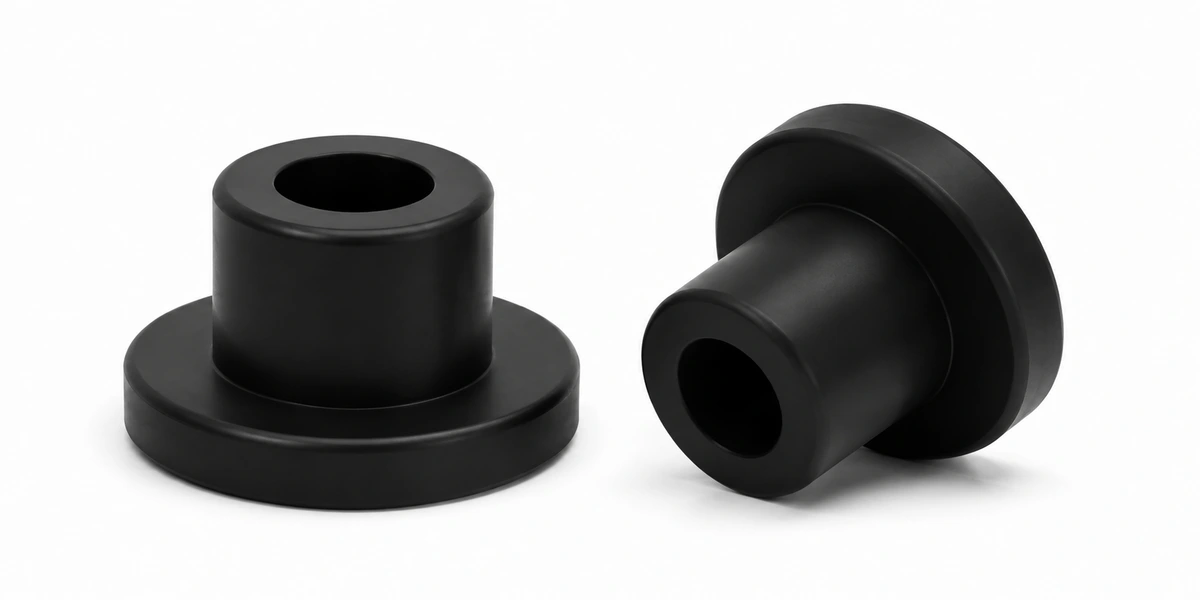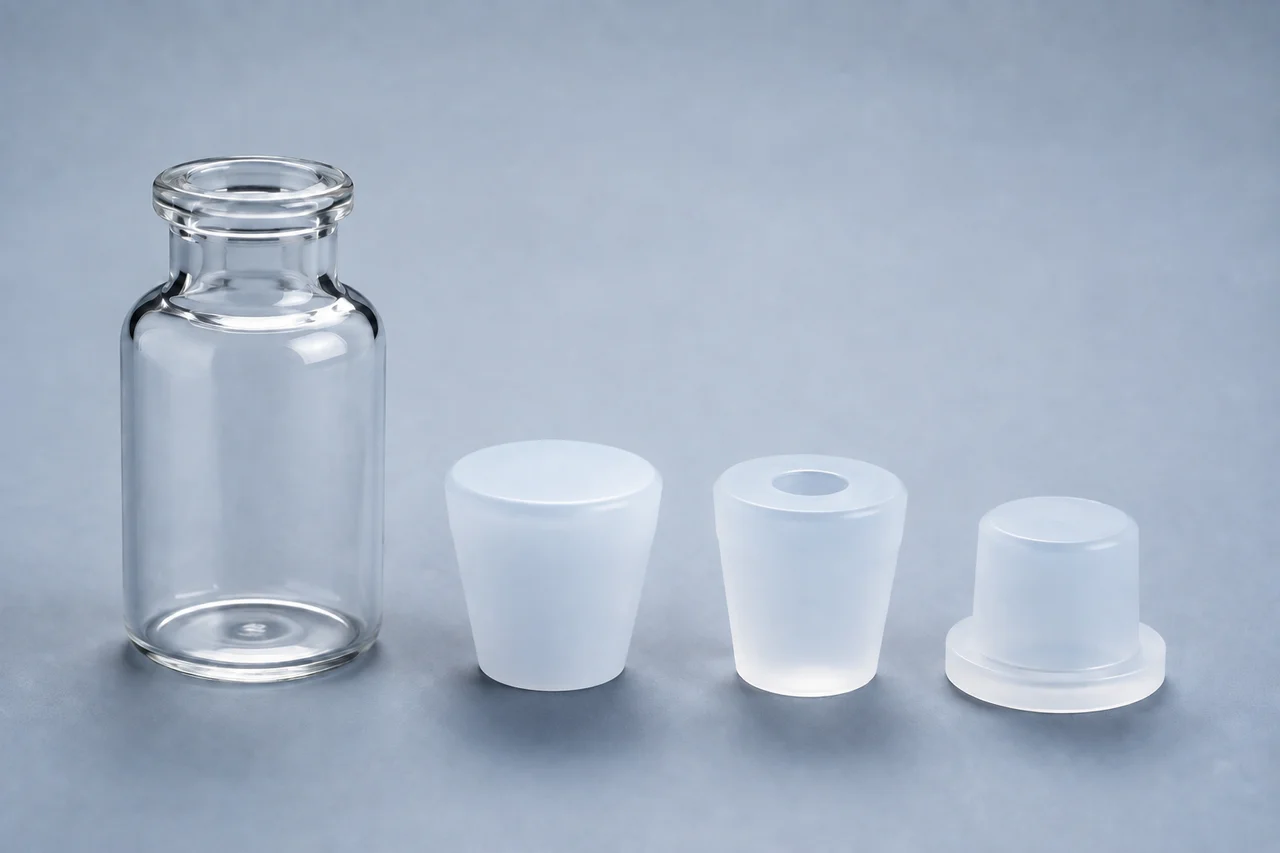
A rubber stopper closes an opening by deforming against its contact surface. When a correctly sized stopper enters a bottle neck or bore, the material compresses and develops contact pressure. A continuous contact band helps restrict leakage and the entry of dust.
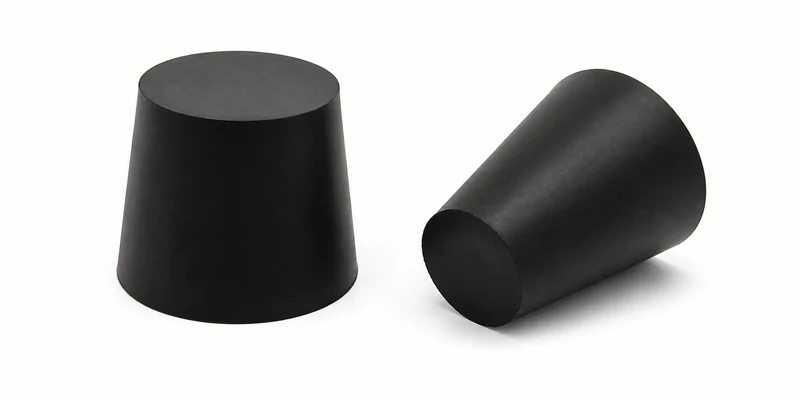
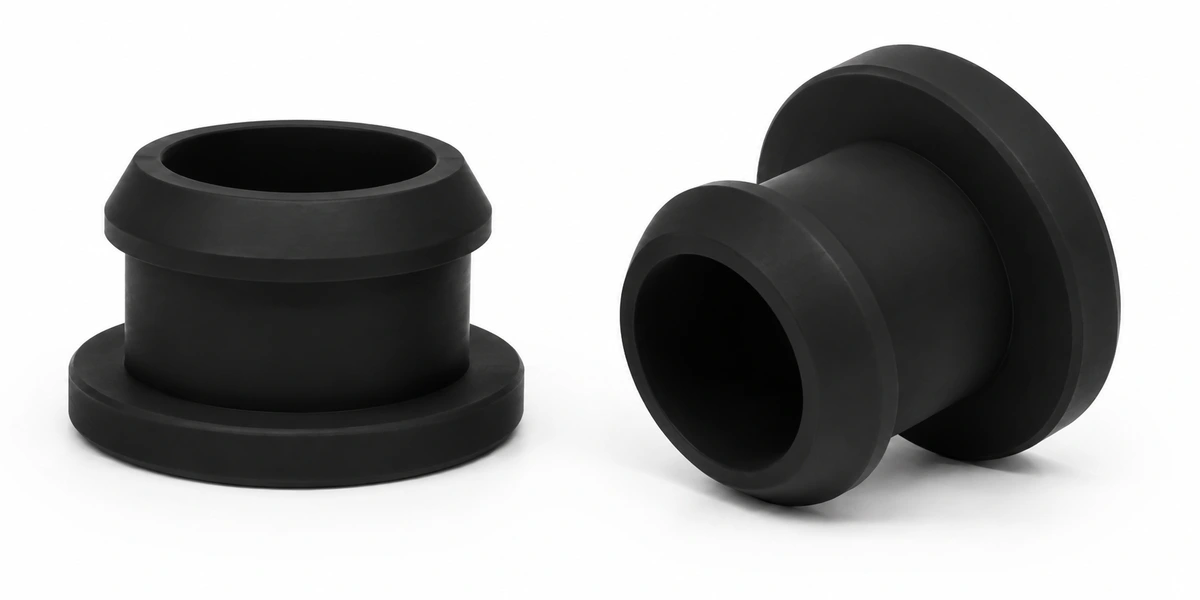
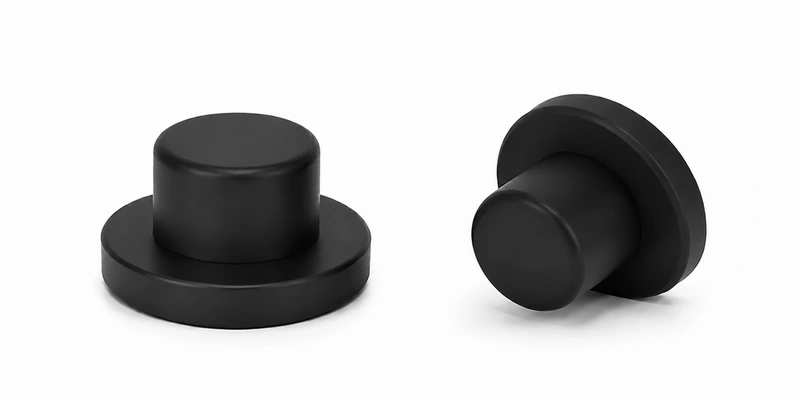
The familiar tapered bung has a narrow end for insertion and a wider end that progressively engages the opening. Cylindrical plugs generally fit a more specific bore. A flange or shoulder can limit insertion depth and provide a surface for handling. Pharmaceutical vial stoppers use closure geometries that must match their intended bottles and caps.
A solid stopper closes the opening, while a drilled stopper accommodates tubing or a probe. Each added hole creates another interface to check: a tight fit around the bottle neck cannot compensate for a loose tube inside the stopper.
Color is not a reliable material identifier. Black components may use different compounds, and a translucent appearance does not establish suitability for food contact. Check the material specification and intended application rather than judging by appearance alone.
Before installation, inspect the sealing area for cuts, missing material, embedded particles and excessive flash. An undamaged surface is a useful starting point, but it does not establish a pressure rating. Gas retention, vacuum service and long-term storage require evaluation of the complete container and closure assembly.
← Back to all articles