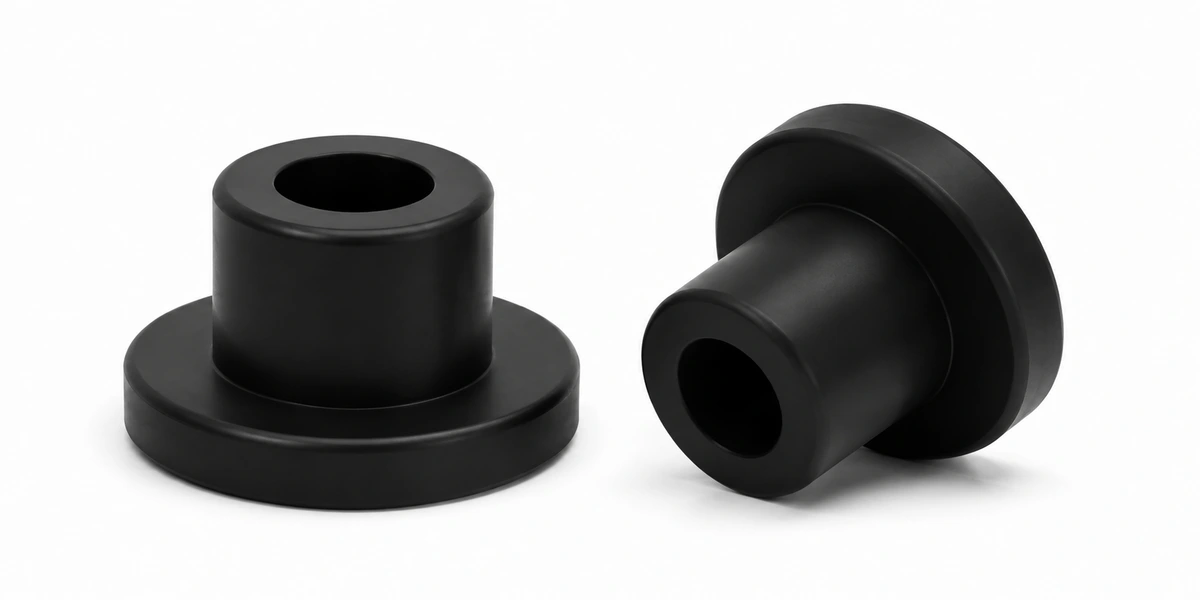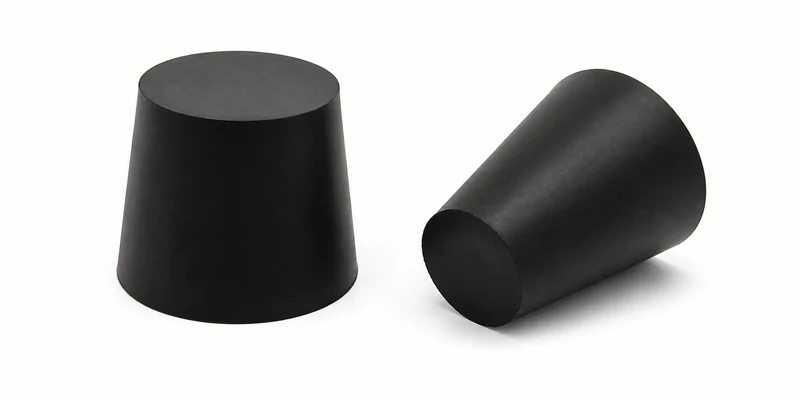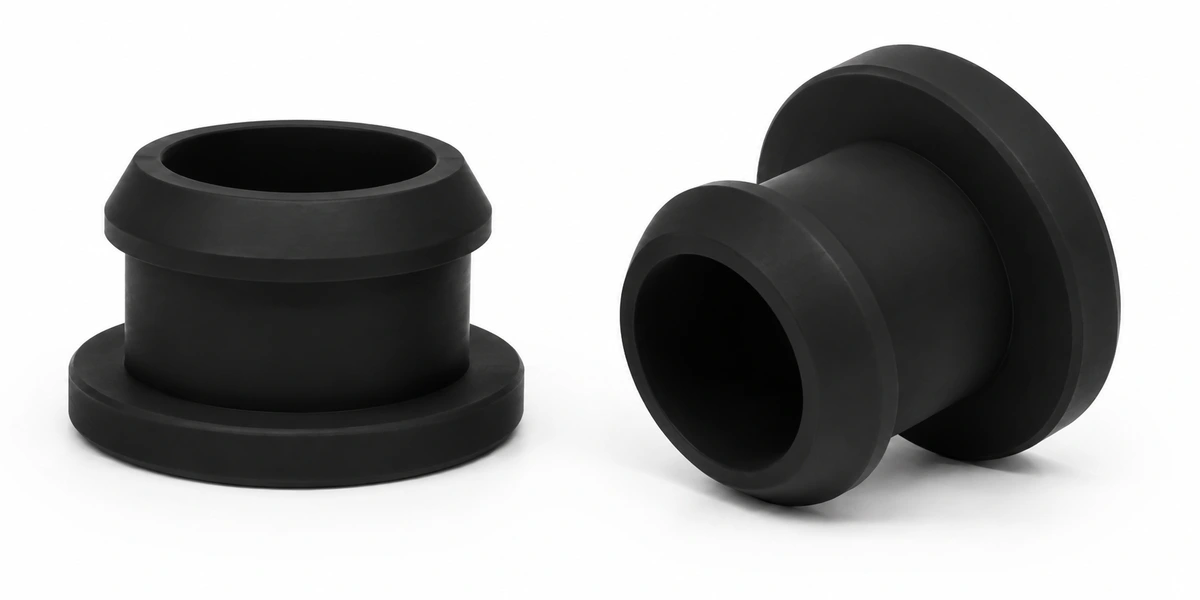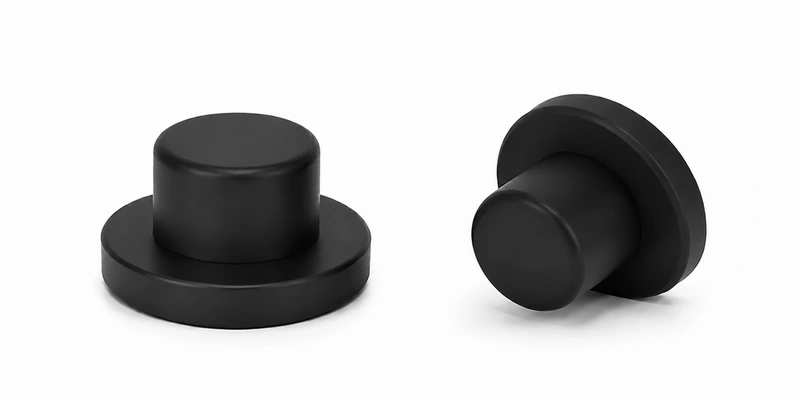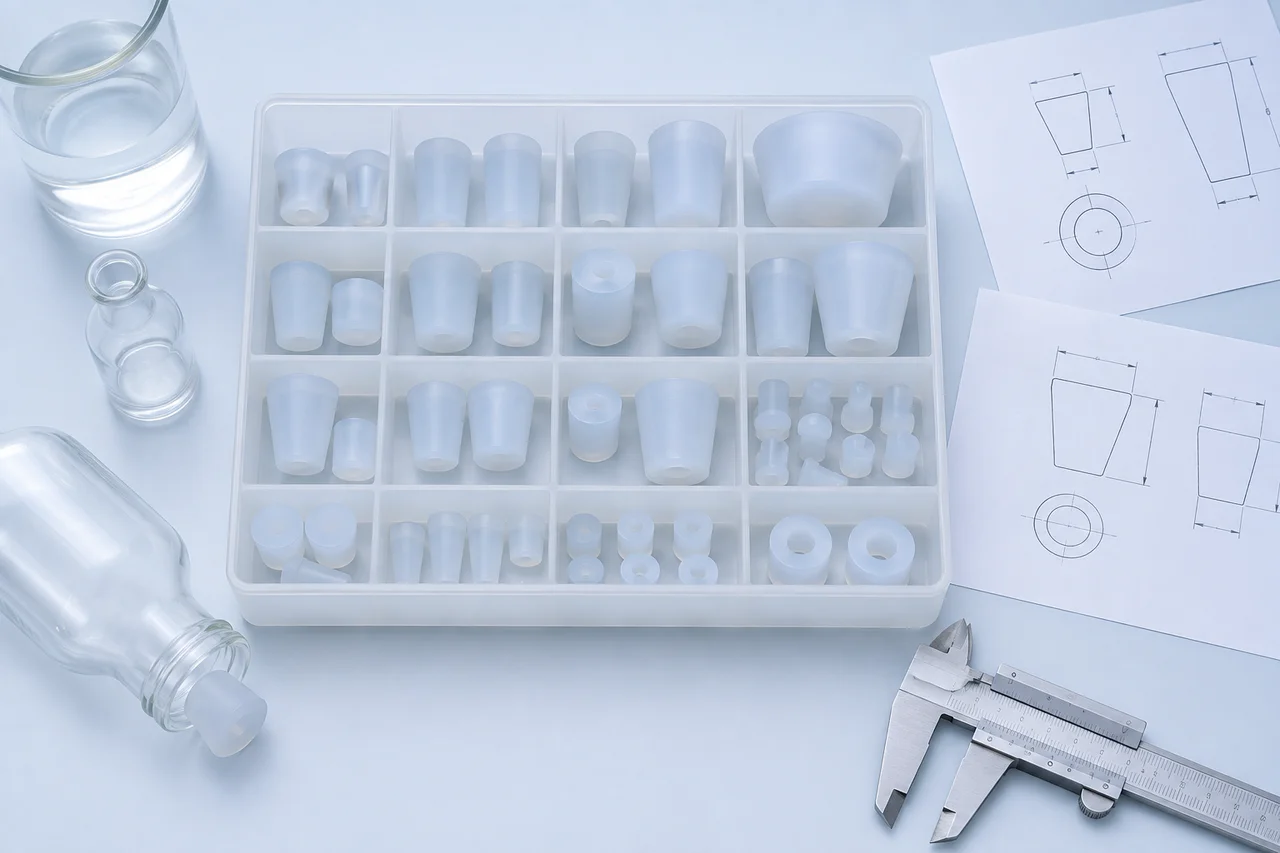
Laboratory suppliers offer standard bungs, industrial masking suppliers provide process-specific plugs, and molded-rubber manufacturers can assess custom designs. Whichever route you choose, a useful request for quotation starts with the mating part and operating conditions.
Include the following information:
- Interface: bottle neck, through-hole, blind bore or tube end, preferably with a drawing.
- Contact media: liquid or gas, concentration, exposure duration and cleaning agents.
- Conditions: temperature, pressure or vacuum, and any sterilization requirement.
- Acceptance criteria: critical dimensions, tolerances, appearance, cleanliness and functional checks.
- Supply needs: sample quantity, expected volume, packaging and batch traceability.
For example, “a 20 mm stopper” leaves several possibilities open. The dimension could refer to the hole, the large end, the small end or a nominal closure designation. Suppliers cannot reliably quote equivalent products until the dimension and its location are clear.
Compare tooling cost, delivery time, sample performance and consistency alongside unit price. For food or pharmaceutical contact, request documentation applicable to the specific product and intended conditions. A broad marketing label is not a complete specification.
Once samples are accepted, record the drawing revision, material requirements and inspection criteria in the order. This makes repeat purchases easier to control and reduces disagreements caused by changing verbal descriptions.
← Back to all articles