
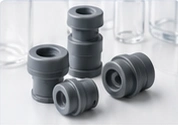
Home / Medical & Pharmaceutical Stoppers
Rubber Stoppers for
Critical Medical Closures.
Our factory develops rubber stoppers to your closure drawing and material requirements. Share the container dimensions, contents and intended access method for a manufacturing review.
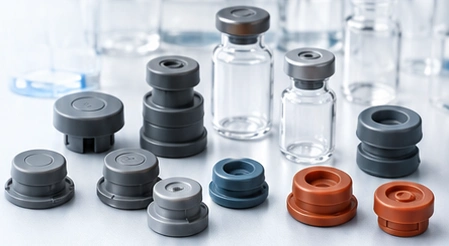
BROMOBUTYL & CHLOROBUTYLCompound suitability review
MOLDING REQUIREMENTSSpecify cleanliness requirements
CUSTOM GEOMETRIESDrawings reviewed for your container
LOT TRACEABILITYAgree required batch records
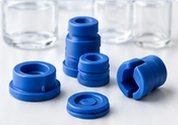
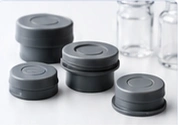
Stoppers by medical application
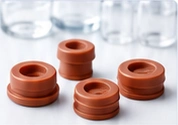
Designed around closure performance
Container Closure Integrity
Define closure integrity checks in the complete container system.
Low Fragmentation
Specify fragmentation and coring acceptance criteria.
Controlled Penetrability
Define the needle and acceptable insertion force.
Reliable Self-Sealing
Specify access count and test resealing in the intended assembly.
Low Extractables
Evaluate the selected compound with your formulation.
Sterilization Compatibility
Confirm the method and cycle for the selected compound.
Performance and compliance are validated to the agreed material, container and sterilization system.
Butyl materials matched
to the drug-contact system
| Material | Primary Benefit | Typical Use | Available Treatment |
|---|---|---|---|
| Bromobutyl Rubber | Evaluate barrier and formulation compatibility | Parenteral vials, lyophilized products | Uncoated / Fluoropolymer laminated |
| Chlorobutyl Rubber | Review the specific compound and contents | Liquid formulations, infusions | Uncoated / Fluoropolymer laminated |
| Silicone-Coated Butyl | Review surface friction and coating requirements | Sensitive formulations, lyophilized products | Silicone coated |
| Fluoropolymer-Laminated Butyl | Review film and formulation compatibility | Formulations requiring a contact-surface review | Fluoropolymer laminated |
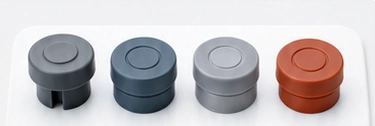
BROMOBUTYLCHLOROBUTYLSILICONE-COATED BUTYLFLUOROPOLYMER-LAMINATED BUTYL
Review the complete closure system.
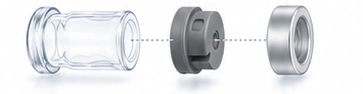
1
Vial Neck
Container finish must be within specification.
2
Stopper Fit
Check interference and geometry in the intended assembly.
3
Crimp Compression
Evaluate crimp compression with the stopper and container.
Key factors we evaluate with you
Container finish
Neck dimensions, geometry and cleanliness.
Formulation compatibility
Drug-contact safety and extractables profile.
Piercing frequency
Single-use or multiple accesses.
Sterilization method
Moist heat, dry heat or gamma.
Storage temperature
Cold chain, ambient or elevated conditions.
Testing built around your specification

Dimensional Inspection
Critical dimensions verified to drawing.
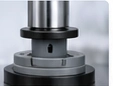
Penetrability
Insertion & withdrawal force testing.

Fragmentation
Particle and coring assessment.

Self-Sealing
Multiple access and leak rate evaluation.

Extractables & Leachables
Designed to support appropriate studies.
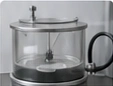
Container Closure Integrity
Agree a suitable closure integrity test method.
Testing plans can be developed around applicable pharmacopeia, ISO requirements and customer protocols.
From component brief to qualified supply
Requirement Review
Understand application, regulatory needs and target performance.
Material & Geometry
Select material, design geometry and surface treatment.
Samples
Produce samples for fit, function and evaluation.
Validation Support
Testing support and documentation for qualification.
Controlled Production
Agree production controls and batch documentation.
Quality in every lot
Clean Handling
Specify handling and cleanliness requirements.
Lot Identification
Agree lot and material identification records.
Inspection records
Documented inspections and test results.
Protective packaging
Secure, clean packaging to protect product quality.
Discuss your stopper application.
Send your closure drawing and requirements to discuss custom manufacturing with our factory.
Application-specific expertiseMaterial and design flexibilityReliable, traceable supply
Ready to start your project?
Get a fast, no-obligation quote from our engineering team.