
Temperature
Provide continuous and peak temperature, exposure duration and cycle frequency.
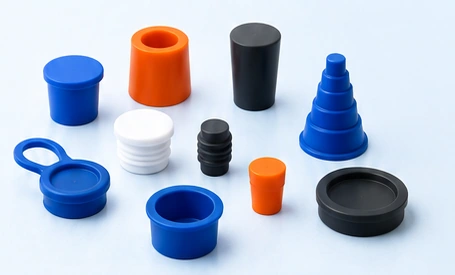
Compare compounds for rubber stoppers and plugs using temperature, fluid contact and fit requirements. Our factory can help you review a suitable material for your custom part.
CHEMICAL RESISTANCE GUIDE
Compare 8 elastomers across 71 common media and conditions. Search a substance or choose a category to narrow the table.
Strong resistance in the reference conditions.
Some swelling or property changes may occur.
Limited suitability; significant changes possible. Test before use.
Unsuitable for the listed medium.
Initial selection only. Reference data is predominantly based on room-temperature exposure, except where a temperature is stated. An Excellent rating does not guarantee performance at the material’s maximum temperature. Confirm concentration, pressure, contact time and the exact compound before use. * marks a conservative screening estimate; its basis is explained in the medium row.
| Medium / substanceCategory & conditions | VMQSilicone | EPDMEPDM rubber | NBRNitrile rubber | FKMFluorocarbon rubber | CRChloroprene rubber | NRNatural rubber | IIRButyl rubber | SBRStyrene-butadiene rubber |
|---|---|---|---|---|---|---|---|---|
| Water, up to 80°CWater & steam* Water near 80°C: conservative estimate from water resistance with allowance for prolonged heat exposure. | ||||||||
| Hot water, up to 135°CWater & steamCheck the exact compound temperature limit.* At 135°C, ordinary NR, SBR and IIR exceed the indicative continuous-temperature limits listed below. | ||||||||
| Steam, below 150°CWater & steamSpecial steam-service compounds may be required.* NR and SBR are unsuitable for sustained steam. IIR is estimated Fair only with a steam-qualified grade; verify the exact temperature. | ||||||||
| Steam, above 150°CWater & steamTemperature-specific grade selection is essential.* Above 150°C, ordinary NR, SBR and IIR exceed their indicative continuous-temperature limits. | ||||||||
| Sea waterWater & steam | ||||||||
| Sodium chloride solution (salt water)Water & steam | ||||||||
| Calcium chloride brineWater & steam | ||||||||
| Mineral oilOils & fuels | ||||||||
| Diesel fuelOils & fuelsValidate biodiesel and additive blends separately. | ||||||||
| Gasoline, refined (petrol)Oils & fuels | ||||||||
| Gasoline / alcohol blendOils & fuelsAlcohol content and fuel additives affect suitability.* Conservative estimate from poor gasoline resistance; alcohol in a fuel blend does not establish compatibility. | ||||||||
| KeroseneOils & fuels | ||||||||
| Silicone oilOils & fuels | ||||||||
| Silicone greaseOils & fuels | ||||||||
| Transformer oilOils & fuels | ||||||||
| Petroleum jelly (Vaseline)Oils & fuels* Petroleum jelly is a petroleum hydrocarbon mixture; estimated from poor mineral-oil resistance. | ||||||||
| Brake fluid, glycol ether baseOils & fuelsDoes not describe silicone-based brake fluid.* NR is estimated Good for glycol-based brake fluid; SBR and IIR follow non-petroleum brake-fluid ratings. Verify the additive package. | ||||||||
| Skydrol 500 hydraulic fluidOils & fuels | ||||||||
| Ethanol (ethyl alcohol)Alcohols & glycolsStandard FKM column; special FKM grades can differ. | ||||||||
| Methanol (methyl alcohol)Alcohols & glycols | ||||||||
| Isopropyl alcohol (IPA)Alcohols & glycols | ||||||||
| Butyl alcoholAlcohols & glycols | ||||||||
| Ethylene glycolAlcohols & glycolsCoolant mixtures and inhibitors need separate validation. | ||||||||
| Diethylene glycolAlcohols & glycols | ||||||||
| Glycerin (glycerol)Alcohols & glycols | ||||||||
| AcetoneSolvents | ||||||||
| Methyl ethyl ketone (MEK)Solvents | ||||||||
| Ethyl acetateSolvents | ||||||||
| Butyl acetateSolvents | ||||||||
| TolueneSolvents | ||||||||
| XyleneSolvents | ||||||||
| HexaneSolvents | ||||||||
| HeptaneSolvents | ||||||||
| Dichloromethane (methylene chloride)Solvents | ||||||||
| ChloroformSolvents | ||||||||
| Tetrahydrofuran (THF)Solvents | ||||||||
| Mineral spirits (white spirit)Solvents | ||||||||
| Citric acidAcids | ||||||||
| Acetic acidAcids* Conservative estimate across 5–30% aqueous acetic acid at room temperature; concentrated acid is listed separately. | ||||||||
| Acetic acid, 96–99.5% (glacial)Acids* Conservative selection from differing glacial-acetic-acid entries; verify concentration and grade. | ||||||||
| Hydrochloric acid, dilutedAcidsThe source does not specify the dilution.* Estimated using the 3-molar hydrochloric-acid entry; confirm the actual dilution and temperature. | ||||||||
| Hydrochloric acid, 37%Acids | ||||||||
| Sulfuric acid, 0–50%Acids* Conservative estimate from dilute and 3-molar sulfuric-acid entries; performance across 0–50% depends on concentration. | ||||||||
| Nitric acid, concentratedAcids | ||||||||
| Phosphoric acid, 45%Acids | ||||||||
| Lactic acidAcids | ||||||||
| Formic acidAcids | ||||||||
| Sodium hydroxide (NaOH)Alkalis & cleanersUses the source “Sodium Hydroxide” entry; concentration is unspecified and other caustic-soda entries differ. | ||||||||
| Ammonia, aqueous solutionAlkalis & cleaners* Conservative estimate using concentrated aqueous ammonium hydroxide; verify the actual ammonia concentration. | ||||||||
| Sodium hypochlorite solution (bleach)Alkalis & cleanersConfirm available chlorine concentration and exposure time. | ||||||||
| Hydrogen peroxide, concentratedAlkalis & cleaners* Conservative estimate using the 90% peroxide entry; concentration, contamination and exposure time affect performance. | ||||||||
| Soap solutionAlkalis & cleaners | ||||||||
| Sodium carbonate solutionAlkalis & cleaners | ||||||||
| Sodium bicarbonate solutionAlkalis & cleaners | ||||||||
| MilkFood & beverage | ||||||||
| CoffeeFood & beverage | ||||||||
| Fruit juicesFood & beverage* Estimated for aqueous fruit juices at room temperature from sugar solutions and dilute organic-acid resistance; acidity and citrus oils can change suitability. | ||||||||
| VinegarFood & beverage | ||||||||
| Sugar solutionsFood & beverage | ||||||||
| Vegetable oilsFood & beverage | ||||||||
| Olive oilFood & beverage | ||||||||
| Soybean oilFood & beverage | ||||||||
| AirGases* Estimated chemical compatibility with clean air at room temperature; excludes ozone, outdoor weathering and heat aging. | ||||||||
| Nitrogen gasGases | ||||||||
| Carbon dioxide, dryGases | ||||||||
| Carbon dioxide, wetGases | ||||||||
| Helium gasGases* Helium is chemically inert at room temperature. This estimate does not rate gas permeability or pressure sealing. | ||||||||
| Hydrogen gasGases | ||||||||
| MethaneGases | ||||||||
| ButaneGases | ||||||||
| OzoneGases |
Read the ratings in context. Mixed labels retain the published range. Ratings marked * are conservative screening estimates based on related chemical behavior or operating limits, not measurements for a supplied compound. Their basis is shown beside the medium.
Grade matters. Ratings describe material families. The FKM column covers standard FKM. Confirm the exact compound for your medium and operating temperature.
Application checks. Food and beverage ratings describe chemical resistance, not food-contact approval. Gas ratings do not establish leak rate, permeability or decompression resistance. Cleaning mixtures and proprietary fluids require validation with their actual formulation.
KNOW YOUR MATERIALS
Compare material families, typical uses and indicative temperature ranges. Confirm the available grade and required documentation for your application.
Compare materials below. On smaller screens, scroll the table sideways.
| Material | Indicative range | Typical applications | Check before choosing |
|---|---|---|---|
| SiliconeVMQ | −55 to +200°C | Heat masking and general static plugs. | Avoid fuels and abrasive service. |
| EPDM rubberEPDM | −40 to +120°C | Water systems and outdoor closures. | Avoid petroleum oils and fuels. |
| Nitrile rubberNBR | −30 to +100°C | Oil-contact plugs and machinery. | Limited ozone and weather resistance. |
| Fluorocarbon rubberFKM | −15 to +200°C | Hot oil and fuel-contact closures. | Check ketones, amines and hot-water compatibility. |
| Chloroprene rubberCR | −40 to +100°C | Outdoor protective caps and general industrial plugs. | Check oil compatibility; avoid aromatic fuels and strong solvents. |
| Natural rubberNR | −40 to +80°C | Flexible push-fit plugs and cushioning closures. | Avoid petroleum oils and fuels; limited heat, ozone and weather resistance. |
| Butyl rubberIIR | −40 to +120°C | Gas-retaining closures and selected container stoppers. | Avoid petroleum oils and fuels; validate gas leakage and recovery after compression. |
| Styrene-butadiene rubberSBR | −40 to +100°C | General-purpose laboratory stoppers and protective plugs, including NR/SBR blends. | Avoid petroleum oils and fuels; limited ozone and outdoor weather resistance. |
Indicative ranges for initial selection only. Actual limits depend on compound, medium, exposure time and seal design. Confirm grade availability and validate samples in your operating conditions.
Provide continuous and peak temperature, exposure duration and cycle frequency.
List fluids, chemicals, cleaning agents and concentrations in contact with the plug.
Specify fit, hardness, material documentation and the tests your application requires.
Get a fast, no-obligation quote from our engineering team.